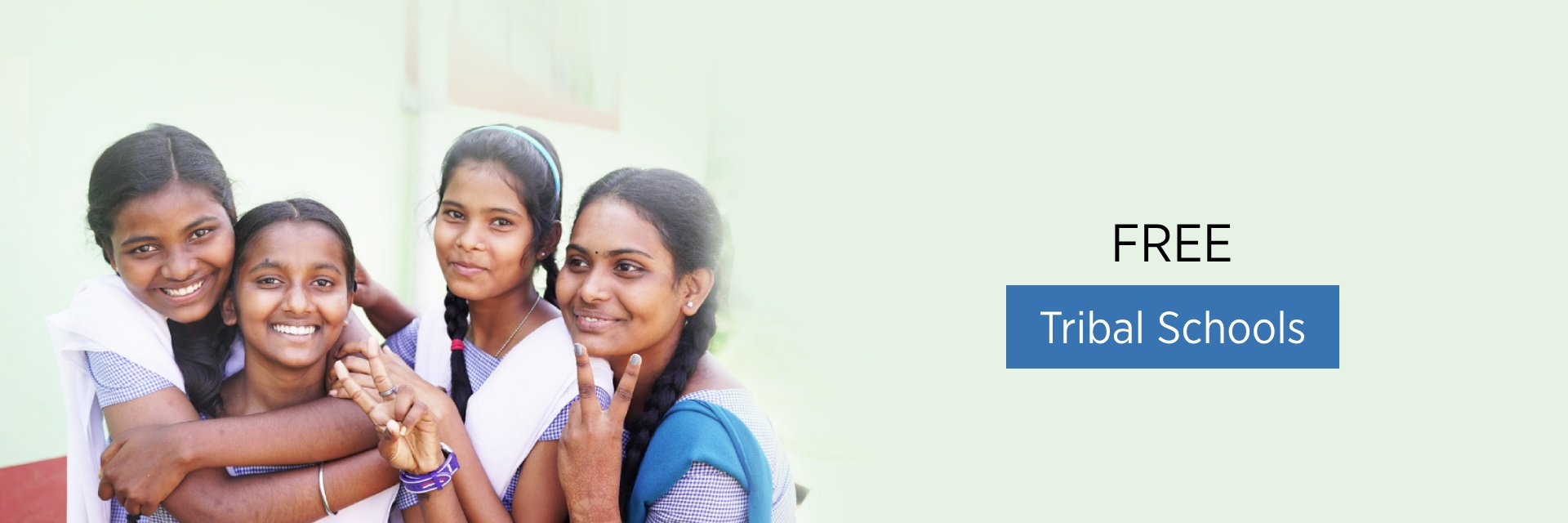
For generations, tribal education in India has been a story shaped by distance—distance from roads, from resources, and from opportunity.
In remote villages hidden deep within forests and hills, survival often came before schooling. Not because parents doubted the value of education, but because access was scarce and daily life was demanding. In the earliest years, children were sent to school mainly for a midday meal or a uniform. The belief that education could reshape lives and futures took time to grow.
There were no motorable roads to these villages. No vehicles to carry construction material. Every brick, desk, and book was carried by hand across long distances. Labour was scarce, land could not be purchased in tribal areas, and classrooms were often simple huts built on land generously donated by villagers. Administrative support was minimal. Trained teachers were unavailable. Funds were always limited.
And yet, the work continued - driven by a quiet but unwavering belief in education for underprivileged children.
A Humble Beginning Guided by Conviction
The first school began with extraordinary simplicity. Three Art of Living volunteers pooled Rs15,000 and started classes in a government community hall in Chhatradanga village, home to a primitive tribal community. Fifty children from nearby villages gathered there, taught by a single local youth who believed that education for the underprivileged in India could open doors no one had imagined before.
Within a year, five schools were running, reaching nearly 300 children. What began as a modest effort soon became a growing movement for education among India’s most underserved communities.
Education that Respects Identity
One truth became clear early on: tribal education in India could succeed only if it honoured local culture.
"We knew teachers had to come from within the community - people who understood the children, their language, and their way of life," recalls a long-time volunteer. To address the shortage of educators, a teacher-training approach rooted in experiential, joyful learning was introduced.
Children spoke Mundari and Oraon as their mother tongues and followed the Akiki script. Hindi was unfamiliar at first, but once linguistic confidence grew, children began learning Sanskrit and English with ease. Language became a bridge, not a barrier.
Gradually, teachers were recruited from local villages, creating trust, continuity, and cultural sensitivity in every classroom.
Learning that Reflects Life
The curriculum was carefully shaped to educate without alienating.
Science and Mathematics were taught using examples from everyday tribal life. Environmental concepts - ecological balance, conservation, and climate awareness - were explained through Sarhul, the tribal festival that celebrates nature. Stories of leaders like Birsa Munda and Sidhu Kanhu were woven into lessons, nurturing pride, self-respect, and cultural confidence.
Children learned to engage with the modern world without losing touch with who they were.
When Opportunity Meets Talent: Alomoni’s Story
That balance between roots and wings is best reflected in the journey of Alomoni Mahato.
Growing up in Hendaljuri village, Alomoni studied at Sri Sri Vidya Mandir (High School) in Ghatshila - a tribal school shaped by this very vision. With discipline, guidance, and access to sports alongside academics, she discovered her talent for archery.
From district and state competitions, Alomoni rose steadily - culminating in a Gold Medal in the Under-14 category at the 69th National School Games Archery Championship (2025-26). Her achievement brought pride not only to her school, but to her entire community.
Alomoni’s success stands as a living reminder of what becomes possible when rural children receive the right environment to grow. Talent, after all, is universal. Opportunity is not.
Education in Challenging Regions
Jharkhand, one of India’s Naxal-affected states, is home to a large tribal population living in isolation, with limited exposure to modern education and technology. Without intervention, generations risked being left behind.
Recognising this, Vyakti Vikas Kendra, India, under the leadership of Shri Chawla, launched the initiative Small Step on Long Journey - with the aim of bringing tribal communities into the mainstream through value-based education.
These successes reflect discipline, confidence, teamwork, and belief - qualities nurtured through holistic education.
Today, the initiative supports:
- One high school
- One middle school
- Ten primary schools across Jharkhand
- Two slum schools in Kolkata
- Two primary schools in Purulia, West Bengal
Together, these schools provide free education to over 2,800 students, most of them first-generation learners.
What Sets these Schools Apart
Following NCERT and JCERT curricula, the schools ensure academic parity while nurturing holistic development through:
- Arts, music, and creative expression
- Outdoor sports such as archery, football, kabaddi, hockey
- Vocational learning including tailoring and handicrafts
- Computer education, robotics exposure, and digital classrooms
- Solar-powered multimedia rooms with internet access
- Yoga, meditation, and value-based education
- Environmental awareness and organic farming practices
- Daily cleaning routines that foster responsibility and ownership
Initiatives like Bal Mela transform learning into a joyful, confidence-building experience.
Schools that Strengthen Communities
These schools have grown into centres of rural transformation - supporting free medical camps, hygiene awareness, natural farming practices, technical training, and large-scale tree plantation drives.
A dedicated Teacher Training Institute, established in 2011, ensures educators receive continuous support and guidance, keeping classrooms child-centric and engaging.
Impact that Speaks Quietly, Clearly
- 2,800+ students enrolled
- 47% girls
- 85% average attendance
- Less than 10% dropout rate
- 300+ new enrollments each year
- 16 schools in operation
- Teachers drawn from local communities
- Solar-powered digital infrastructure across campuses
- Over 4,800 students have successfully completed Classes V, VIII, and X
Each number represents a life shaped by care, consistency, and belief.
Education without Erasing Identity
"A school should be a place for uninhibited child development," says Shri Chawla. "Our children must be ready for the wider world - without losing pride in who they are."
This is the essence of tribal education done right: empowerment without erasure.
Join the Journey
When you support tribal education, you sustain schools that nurture confidence, dignity, and opportunity in regions that need it most. You help provide classrooms, teachers, nourishment, and hope.
What began as a single school with fifty children now touches thousands of lives. With your support, it can reach many more.
Support education for underprivileged children.
Support tribal education.
Help build futures that last.